
How It Works
LibriVox vs Audible: Free Volunteer Reads and Paid Audiobooks
LibriVox vs Audible: who records LibriVox's free public-domain audiobooks, how the copyright works, and what a paid Audible plan adds. Five classics compared.
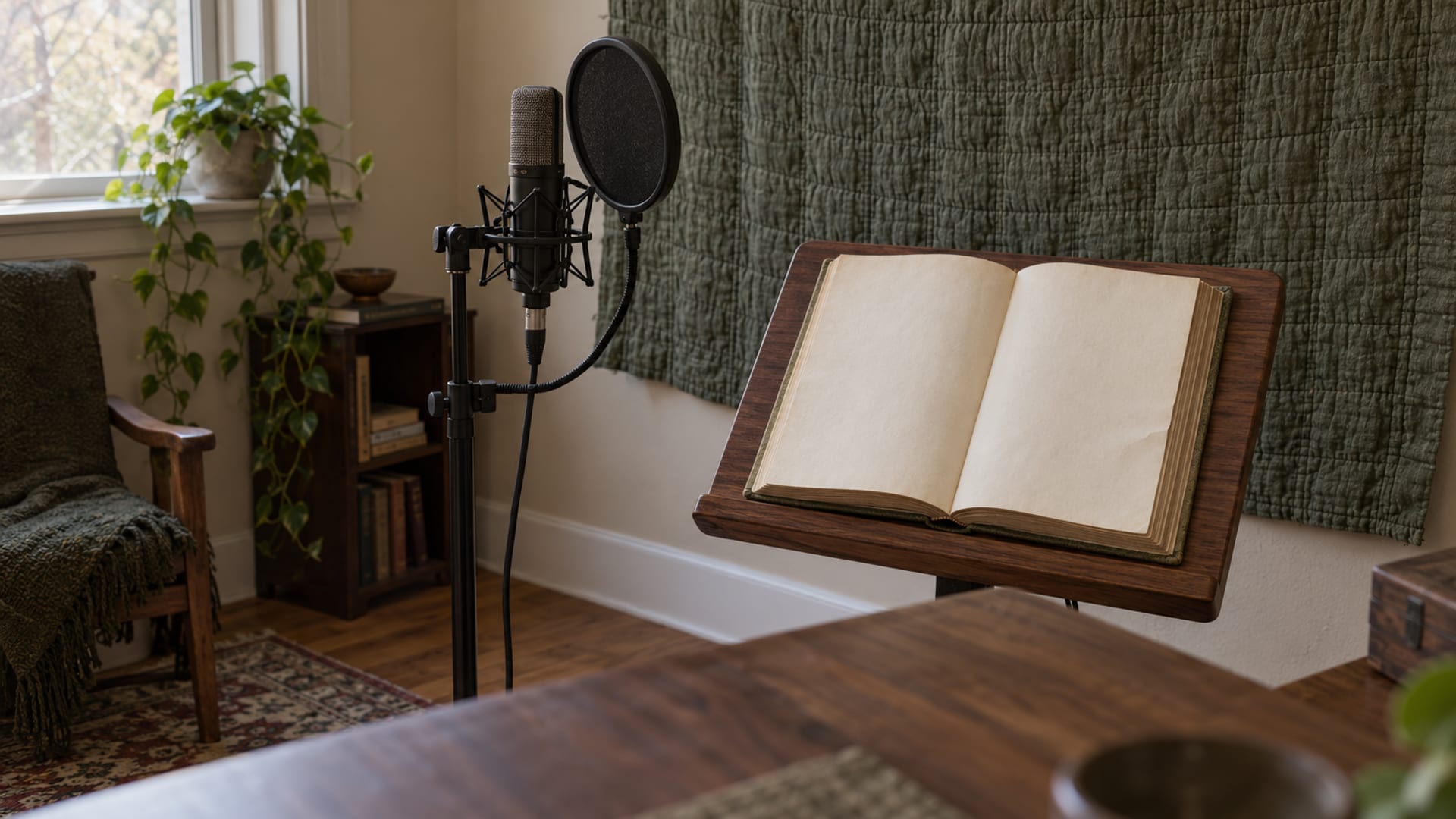
LibriVox is a free library of public-domain audiobooks read by volunteers. Hugh McGuire started it in August 2005, and its stated aim is to make public-domain books available as free internet audiobooks, narrated by real people (LibriVox, About). Audible is a paid catalogue of commercial productions. For a classic, you choose by what you want from the recording, and trying LibriVox costs nothing.
Who makes a LibriVox recording
LibriVox runs on volunteers. A reader picks a book and claims either a few chapters or the whole thing. A book coordinator runs each project, collects the files and manages production. Proof listeners then listen for technical and recording problems before the book is catalogued, and a separate group of coordinators handles the cataloguing (LibriVox, Feedback).
There is no audition and no previous recording experience required, and volunteers can read in any language (LibriVox, Volunteer). Readers use free recording software and ordinary computer microphones, and they choose the books they record (LibriVox, About Recording).
The rules are short:
- The work is non-commercial, nonprofit and ad-free.
- Volunteers record public-domain texts.
- The recordings are donated to the public domain.
- Readers follow the copyright law of the country where they live.
That describes how the recordings get made. It does not tell you how any one of them sounds, and this page does not rate them. LibriVox itself accepts any understandable reader and does not rank volunteer narration against professional narration.
Are LibriVox recordings really public domain?
In the United States, yes. LibriVox says its recordings are public domain, so they can be copied and shared there. The books have to be public domain first, and LibriVox says that in practice volunteers record books published in the United States at least 95 full years earlier. The U.S. Copyright Office says works published in the United States before January 1, 1931 are in the public domain because their copyright has expired (U.S. Copyright Office, What Is Copyright?).
That is a US rule. A recording that is public domain in the United States may still be protected somewhere else, so if you live outside the US, check your own country's copyright law before you copy or share a file.
As for size, LibriVox's own homepage lists 21,767 catalogued works, 49 languages and 14,923 readers. Those are the site's own figures as of October 2026 (LibriVox).

How to choose a LibriVox recording
Search the catalogue by title or author at the LibriVox catalogue search. Then open the individual recording page instead of stopping at the search result. Each page tells you what kind of recording it is:
- Solo: one reader throughout.
- Group: the chapters are split among several readers.
- Dramatic Reading: a cast performs the roles.
The advanced search has a Solo/Group filter. Each recording page lists the readers by chapter, the book coordinator, the catalogue date and the running time (LibriVox Help). Gatsby read by Kara Shallenberg is a solo example. Dracula is a collaborative one, with chapters assigned to different readers. Searching one title with the filter on can bring up several versions of the same classic, and you can sample a few before you commit.
There are other free routes too:
- Libby lets you search a participating library, borrow an available audiobook and download it for offline listening. You need a library card, and each library sets its own catalogue, loan rules and availability. You borrow the book rather than keep it (Libby help).
- Lit2Go, from the University of South Florida, is a free collection of stories and poems as MP3 audio. It gives you the passage text, citations, playing time and downloadable PDFs for reading along, and it includes public-domain classics (Lit2Go).
- Storynory offers free audio stories for children, including original stories, adaptations, fairy tales and poems. It says its content is free for homes and schools (About Storynory).
One classic, many recordings
Here is what five familiar classics look like on each side. The runtimes come from each individual listing, so they describe one recording and not the book. Different recordings of the same title can run differently, and the list shows it.
- Frankenstein: LibriVox version 3, read by Caden Vaughn Clegg, lists 7:26:03 (LibriVox listing). The Audible edition read by Dan Stevens lists 8 hrs 35 mins.
- Pride and Prejudice: LibriVox version 2, read by Annie Coleman Rothenberg, lists 13:25:01 (LibriVox listing). The Audible edition read by Rosamund Pike lists 11 hrs 35 mins.
- Alice's Adventures in Wonderland: LibriVox version 2, read by Kara Shallenberg, lists 2:47:21 (LibriVox listing). The Audible edition read by Scarlett Johansson lists 2 hrs 44 mins.
- Dracula: the LibriVox recording is collaborative, with different volunteers reading different chapters, and lists 16:31:09 (LibriVox listing). The Audible edition uses a multi-narrator cast and lists 15 hrs 27 mins.
- The Great Gatsby: the LibriVox solo recording by Kara Shallenberg lists 05:38:03 (LibriVox listing). The Audible edition read by Jake Gyllenhaal lists 4 hrs 49 mins.
LibriVox's own catalogue shows the same thing within one side. Frankenstein has a separate recording of the 1818 text read by Cori Samuel, listed at 7:59:15 (LibriVox listing). Pride and Prejudice has a solo recording by Elizabeth Klett, listed at 11 hrs 9 mins on a LibriVox audiobook page (listing). The Great Gatsby has a second solo recording, read by Martin Reyto and listed at 05:45:02 (LibriVox listing). Those are three more recordings with three more running times.
The point is that one title can mean several different recordings. A running time or a narrator's name from one listing does not carry over to another. LibriVox can hold more than one version of a book, solo, group or dramatic, and a paid store lists its own productions by their own narrators. Check the listing for the exact recording you are about to start.
What you gain and what you give up
These are facts about each side, not a ranking.
With LibriVox, you pay nothing and there is no subscription. You can download files as MP3 or M4B, follow a book through an RSS podcast app, or find LibriVox recordings in the Internet Archive (LibriVox Help). What you give up is range: LibriVox covers public-domain books only, so a current bestseller is not there. A title may also have several volunteer versions, solo or group, and you pick among them.
With Audible, you get a catalogue of current books and commercial productions. The Standard plan is advertised at $8.99 a month, and individual titles are priced separately (Audible membership plans). Those are US prices as published October 1, 2026.
Two other paid routes come up often. The Apple Books app is free, with audiobooks priced individually (Apple Books). Spotify Premium Individual lists 15 hours of audiobook listening a month (Spotify audiobooks).
One practical point sits between the two sides. LibriVox recordings are freely redistributable, and the third-party LibriVox apps say so (LibriVox, apps and redistribution). The LibriVox Audio Books app on Android and the LibriVox Audiobooks app on iPhone and iPad are third-party apps. Their store listings describe free access to the recordings, with optional paid features such as subscriptions or ad removal (Google Play, App Store). Audible also carries a podcast called LibriVox Anniversary Collections, and Spotify carries a Librivox Audiobooks podcast (Spotify).
So, a paid app or platform may charge for access or for features around the recording, and not for the recording itself. Before you pay for a public-domain title anywhere, compare the narrator and production details with the LibriVox catalogue page.

Common questions
A few short answers.
Are LibriVox recordings in the public domain?
Yes, in the United States. LibriVox records books published in the US at least 95 full years earlier and donates the recordings to the public domain. Other countries have their own rules, so check yours.
Is LibriVox free?
Yes. By its own rules, LibriVox is non-commercial and ad-free, and listening costs nothing.
Who reads LibriVox books?
Volunteers, in many languages. LibriVox asks for no audition and no previous experience.
Why does one classic have several LibriVox recordings?
Different volunteers can record separate solo or group versions of the same text. That is why you check the reader and the type on the recording page before you start.
Can I listen to LibriVox on my phone?
Yes. You can download files from the website, use an RSS podcast app, or use a third-party LibriVox app on Android or iPhone (LibriVox Help).
Your next step
For a classic, open the LibriVox catalogue page first and see which versions exist. If you want a current book or a commercially produced recording, Audible's Standard plan is advertised at $8.99 a month after a 30-day free trial, per its membership page. Either way, find out which recording you are about to start before you press play. Two pages on this site show how that works for series and narrators: the Chronicles of Narnia audiobook order and the Mere Christianity narrator page.
By Cal Hewitt. Published .