
Tim Curry Read Ten of the Thirteen
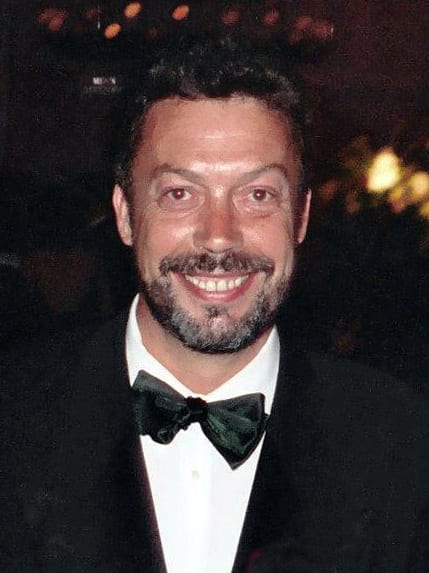
Tim Curry has died at 80. He gave us Frank-N-Furter, Pennywise and Nigel Thornberry, and he read ten of the thirteen Series of Unfortunate Events audiobooks, 47 hours of the voice that did all of it.
The verdict
- Category
- Literary & Contemporary
Tim Curry died this week at his home in Los Angeles, at 80. He narrated ten of the thirteen Series of Unfortunate Events audiobooks, 47 hours and 40 minutes of them, and every one was recorded before the 2012 stroke that took nearly everything he could do and left him his voice. Here is which ten, and what those recordings actually are.
He had been a working actor for more than fifty years and he was almost never out of work. He was Frank-N-Furter in The Rocky Horror Picture Show in 1975, which is the one that follows a man for a lifetime. He was Pennywise in the 1990 It, which is the one that followed a generation of children into adulthood and stayed. He was Wadsworth in Clue, and Darkness in Legend under a mountain of prosthetics, and Rooster in Annie, and Cardinal Richelieu, and the hotel concierge in Home Alone 2, and Long John Silver in Muppet Treasure Island, which is the role people have been posting all week and saying they are going to go and watch tonight.
That is the filmography, and other people are writing it up better than I can.
What he actually was, if you were born after about 1985
He was a voice.
For an enormous number of people, Tim Curry was never primarily a face at all. He was Captain Hook in Peter Pan and the Pirates, and he won a Daytime Emmy for it, the only major screen award he ever took home. He was Hexxus, the oil-slick pollution demon in FernGully, singing. He was Sir Nigel Thornberry for six years and two films, which means an entire cohort of adults can still do the "smashing" on demand. He was Anton Sevarius in Gargoyles, Professor Calamitous in Jimmy Neutron, a villain in Captain Planet, the Adversary in Over the Garden Wall.
He was Chancellor Palpatine in The Clone Wars, taking over one of the most closely guarded voices in popular culture and getting away with it.
He was nominated for a Grammy too, in 2002, for reading The Bad Beginning. Three Tony nominations and two Olivier nominations as well, and the only one he ever actually won was the pirate, which is a good joke on a career like his.
That instrument is the reason this site has a page about him at all. He had the rare thing: a voice you could pick out of a crowded room in two syllables, that could be silky and rotten in the same sentence, that never once condescended to a child listening to it.
The stroke, and what he did afterwards
On 13 July 2012 he had a major stroke, and it put him in a wheelchair permanently. Of the recovery he said the strangest part was the speaking: "It was very peculiar not to be able to speak, and to find a voice again was difficult."
He found it. A man whose entire professional life was one of the most recognisable voices of his generation went and learned to speak again in his sixties, after brain surgery, and then went back to work.
And he did go back. The Clone Wars ran on to 2014, Over the Garden Wall is 2014, and voice work was very nearly the only kind of work still open to him. He gave another fourteen years to it from a wheelchair, which is the part I would want remembered alongside the lipstick and the fangs.
The ones you remember may be the wrong ones
We listened to all thirteen Series of Unfortunate Events audiobooks, my grand-nephew and I, over a long stretch of car journeys.
When I sat down to write this I tried to remember which of them were his. The two that came back to me were The Wide Window and The Miserable Mill.
Those are books three and four. They are two of the three that Daniel Handler read himself.
I had it exactly backwards, and I think that is the most useful thing I can tell you about him as a narrator. Everything Curry did across the other ten went into me without leaving a fingerprint. The recordings that left a mark were the ones where the voice changed and something in the back of my head went wrong. That is not a failure of my memory. It is a description of what he was doing well enough that I never noticed him doing it.
Who read what
| Books | Narrator |
|---|---|
| 1, 2 | Tim Curry |
| 3, 4, 5 | Daniel Handler, credited as Lemony Snicket |
| 6 through 13 | Tim Curry |
Ten for Curry. Handler read three in the middle and handed it back; secondary accounts say he found narrating unbelievably arduous, which I can believe, and I have not found him saying it in a primary interview, so take that as reported rather than quoted. If you see the figure nine this week, it is a miscount that drops The End.
What those recordings actually are
Book one is not a solo reading. The product is titled The Bad Beginning, A Multi-Voice Recording, and the publisher's own description says Curry narrates it "with a team of talented readers". AudioFile's review credits Oliver Wyman and Tara Sands alongside him. If you go looking for two and a half hours of Tim Curry alone, book one is not quite that, and its title has been saying so for twenty years.
I have not established whether the same treatment carries through books six to thirteen. Only book one says it in the title, and I am not going to assert a pattern from one data point on a page whose subject is people getting his credits wrong.
*Book ten, The Slippery Slope, lists Stephin Merritt* of The Magnetic Fields on its product page alongside him. If you ever wondered where the songs came from, start there.
They get longer, and then they stop
| Book | Runtime |
|---|---|
| 1, The Bad Beginning | 2 h 29 m |
| 2, The Reptile Room | 3 h 11 m |
| 6, The Ersatz Elevator | 4 h 23 m |
| 7, The Vile Village | 4 h 17 m |
| 8, The Hostile Hospital | 4 h 12 m |
| 9, The Carnivorous Carnival | 4 h 50 m |
| 10, The Slippery Slope | 6 h 01 m |
| 11, The Grim Grotto | 5 h 59 m |
| 12, The Penultimate Peril | 6 h 26 m |
| 13, The End | 5 h 52 m |
47 hours 40 minutes. Book one is an after-school listen and book twelve is a commitment, then thirteen pulls back in. Practically: the early ones are short enough to try, and the later ones are not.
What forty-seven hours with him tells you
What I can tell you is that a nine-year-old sat through 47 hours of him and never once asked who was reading. The books are relentlessly gloomy on purpose, they spend their whole length telling you to stop listening, and the joke only works if the narrator plays it completely straight. He did, for ten books, without ever once winking at the adult in the driver's seat.
What I cannot tell you is anything scene by scene. This was car-journey listening spread over a long time, not a critical listen with a notebook. Ask me which of the ten is his best and I will tell you I do not know, and that anybody answering that confidently about a family listen from years ago is telling you about their confidence.
Why the recordings matter more than they did last week
Because they are what is left of it.
The films are performances of a character. The audiobooks are 47 hours of the man simply talking, at length, doing the thing he was best at, recorded before 2012 when he still had everything. There is no camera, no prosthetics, no Frank-N-Furter, no makeup. It is just the voice, unhurried, working through thirteen books about orphans and misfortune for an audience of children who were not being talked down to.
He lost that voice once and went and got it back. Now it is fixed where it is, and there will be no more of it, and there is a great deal of it.
If you are starting
Start with book one. Two and a half hours is a small enough bet that a child who does not take to it has cost you an evening, and if they do take to it there are twelve more.
And when you get to book three and somebody in the back says the man sounds different, they are right. Books three to five are read by Daniel Handler, and Curry is back for book six.
- Narrator Spotlight
- Literary & Contemporary
- Funny
- Dark
Read This Next
All reviews
Emergency Neil Strauss Review: The Book That Changed How I Live
Neil Strauss, narrated by Neil Strauss
- Writing
- 4.75
- Narration
- 4.0

Everyone Loves You When You're Dead Book Review: No Audiobook, and Why
Neil Strauss
- Writing
- 4.25
- Narration
- none exists
Neil Strauss in Audio: Two of the Big Ones Are Abridged

The Game Neil Strauss Audiobook Review: What the Cut Costs
Neil Strauss, narrated by Neil Strauss
- Writing
- 4.0
- Narration
- 3.5