
On Writing Anniversary Edition: Which One, and Read or Listen?
Four editions are in circulation, the covers barely differ, and the listings do not say what is inside. Here is what each one adds, and which half of the book each format suits.
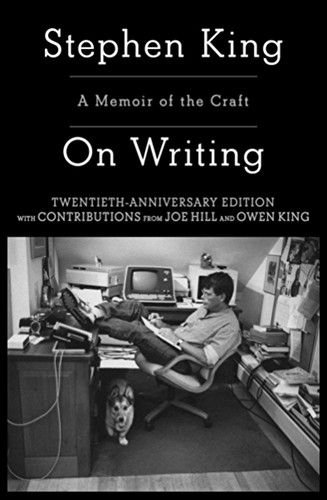
Cover via Open Library
The verdict
- Writing
- 4.25
- Narration
- 4.5
- Author
- Stephen King
- Narrator
- Stephen King
- Runtime
- 9 hr 7 min
- Publisher
- Scribner
- Category
- Narrative Nonfiction
Verify the edition before you buy, in either format. Four are in circulation and the covers barely tell them apart. Then choose by which half you came for: listen for the memoir, because King reads it himself, and read for the craft apparatus, because a reading list is something you scan and mark up rather than absorb at speaking pace.
That is the whole answer, and this is the first entry in this column where it is not a winner. The two formats genuinely hold different things. So does each edition. Nobody selling you the book will tell you which, so the rest of this does.
Which editions are actually out there?
Four, and one of them you probably cannot buy where you live.
The 2000 Scribner original. The baseline. Worth saying clearly, because it gets misreported: this edition already contains the appended reading list and the "And Furthermore" section where King shows a passage of draft prose and then the same passage carrying his own revision marks. You are not missing the apparatus by buying the original.
The 2010 Tenth Anniversary Edition. Adds an updated reading list from King. So, the position is not "the original has no list and later ones do", it is that this edition gives you a second list alongside the first.
The 2020 Twentieth Anniversary Edition, which is the current US text at 320 pages. Adds contributions from Joe Hill and Owen King, and a new foreword from King called "On Joy".
The 2025 25th Anniversary Classic Edition, from Hodder. This one has two catches. It is sold in the UK, Ireland and the Commonwealth and not in the US or Canada, so a North American buyer meets it as an import if at all. And on the publisher material I could check, it does not add a new chapter or a revised reading list. It is the twentieth-anniversary text in a collector binding: cloth boards, foil, a ribbon. Lovely object, not more book.
Why does one of them say "50 years of writing"?
Because it is a career milestone printed on an anniversary-of-the-book edition, and it confuses people constantly.
The US 2020 edition carries marketing copy celebrating fifty years of King's writing. King's own site identifies that same edition as the Twentieth Anniversary Edition. Both are accurate and they are counting different things: the book turned twenty, the career turned fifty.
There is no fiftieth-anniversary edition of On Writing, and there could not be. The book came out in 2000. If a listing implies otherwise, it is quoting the strapline rather than the edition.
What is the reading list, and does the edition change it?
It is the appendix where King names the books he read while writing, and it runs to a size you work through rather than finish in an afternoon.
This is the single most concrete reason to care which edition you buy. The 2000 original has a list. The 2010 edition adds an updated one. If the list is the reason you are buying the book, that upgrade is real and it is the one to look for.
What the list is not is something audio can hand you. That is not a knock on the recording. It is that a long list of titles is a thing you scan, mark, and come back to three times, and no narrator can make that work at speaking pace. If you listen to the book and the list is why you wanted it, you will end up buying the print copy as well.
The same goes for the revision demonstration. Watching King cut his own sentences is a visual argument. He can describe an edit aloud; he cannot show you the page with the marks on it.
Should you listen to it?
For the memoir half, yes, and this is the strongest case for author-narrated audio I have come across.
King reads it himself. In a memoir that means the real people, and he brings them alive in a way a hired performer cannot: his mother, the teachers, the version of himself grinding out submissions with a nail in the wall for the rejection slips. Reading your own life aloud is a different act from performing a novel. What you get is closer to sitting across from him than to being read to, almost like looking straight into the author's mind.
That is a 4.5 from me, and the writing sits at 4.25.
The recording runs about nine hours, unabridged, and the twentieth-anniversary program includes Owen King reading his own essay about recording audiobooks for his father, and a recorded conversation between Joe Hill and Stephen King.
Both are in the anniversary print editions too, per the official publisher records, so neither is audio-only. What the audio gives you is each man reading his own contribution, which is worth something on its own terms but is not extra material you can only get one way.
Does the audiobook have editions too?
Yes. The recording grew. The current file runs about nine hours, while the original audio release was shorter, and the difference is roughly the anniversary additions: Owen King's essay and the Joe Hill conversation. So, the audio has the same problem as the print, in a quieter form. Two listeners can both say they finished the audiobook and have heard measurably different amounts of it.
The practical version of that: check the runtime, not the date. If it is around nine hours you have the anniversary program. If it is noticeably shorter, you have an earlier one, and you are missing the same material a pre-2020 print copy is missing.
And the date really will mislead you. The main Amazon listing for the audiobook still shows a release date of October 2000, because it is the original product record, but the file sitting behind it today is the nine-hour anniversary program and the credits name Joe Hill and Owen King. The listing did not change its date when the contents changed. On this book the runtime and the credit line are the honest signals and the publication date is not one at all.
⚠️ One honest limit. The publisher does not state the individual lengths of the two extras, so I am not going to give you a minutes figure for either. The trade press describes the Hill conversation as about an hour, and that is a secondary source rather than the publisher, which is exactly the sort of number that hardens into fact by repetition.
How do you tell them apart when buying secondhand?
By the ISBN, because nothing else is reliable.
The covers are close cousins and secondhand listings routinely photograph one edition and ship another. The numbers worth having in your phone: the 2000 original is 9780684853529, the 2010 tenth anniversary is 9781439156810, the 2020 US twentieth anniversary is 9781982159375, and the 2025 Hodder hardback is 9781399741712.
A listing that gives you a photograph and no ISBN is a listing that does not know which edition it has. On a book where four printings differ in contents, that matters more than it would on a novel.
So, which do you actually buy?
Work backwards from what you want.
You want the memoir. Listen. This is the version where the book is a man telling you about his life, and it is better told than read.
You want the craft manual. Read, and get the 2010 edition or later so you have the updated list. The apparatus is the reason, and the apparatus is visual.
You want both. This is a book worth owning twice, and I do not say that often. Listen first for the memoir, then keep a print copy for the parts you will return to. If that sounds like an upsell, the cheaper version is to listen on a trial credit and buy the paperback second.
You are buying a gift. The 2025 Hodder hardback is the handsome one, if the recipient is somewhere it is sold. Check that before you order.
What should you know before you start?
This is a memoir as much as a manual, and King's life includes hard material.
He writes about addiction and recovery, alcohol and drugs both, with a directness that is one of the book's real strengths and may still be difficult reading. He also writes about the road accident that nearly killed him in 1999 and the recovery afterwards, including medical and rehabilitation detail. There is childhood poverty, family hardship and bereavement.
None of that is sensationalised and none of it is the bulk of the book. But a reader who picks this up expecting a straightforward writing guide can be caught off guard by how personal it gets, and that is worth knowing in advance.
Does the UK edition differ from the US one?
Not in the text, as far as the records show, but in almost everything else.
The UK line comes from Hodder rather than Scribner, it is independently typeset, and the page counts do not map across. UK records for the same book run to numbers well above the US ones, which is a setting difference rather than more book. I found no publisher statement that the novel text differs between territories.
Where it does matter is availability. The 2020 anniversary material exists on both sides: the UK paperback bills itself as carrying the Joe Hill and Owen King contributions and King's foreword, so a UK buyer is not missing the additions. The 2025 collector hardback runs the other way, being a UK and Commonwealth product that a US buyer cannot easily get.
So: buy the edition from your own territory, and use the ISBN rather than the page count to check what you are getting.
Is it worth reading if you do not write?
More than people expect, and this is the audience the book quietly serves best.
Roughly half of it is a memoir about a life, and it is a good one: poverty, a mother holding a family together, teaching, the years of rejection, the accident. You do not need to care about semicolons to get something from that.
What you would be buying it for, if you never intend to write a word, is the account of somebody doing difficult work for a long time before it paid, and continuing after it nearly ended. That is not a writing lesson. It is a working lesson, and it lands the same way on anyone who makes things.
If that is your reason, the audio is the version to get. The craft apparatus is what the print edition is for, and it is precisely the part you would skim.
Who is this for, and who should skip it?
For you if you write anything, at any level, and want one book that is both a craft manual and an argument for why the work is worth doing. Also for you if you have never read King's fiction and never intend to. This is not a book about horror novels.
If it sends you toward the fiction and you want the long version, 11/22/63 runs thirty hours and forty minutes on audio and we have written up where it gets hard and who should not attempt it.
Skip it if you want a technical manual. It is not organised as one, it does not cover structure or plot mechanics systematically, and readers who arrive wanting a syllabus tend to leave frustrated. Skip the audio specifically if the list and the revision pages are the reason you are buying, because those are the two things the recording cannot give you.
Common questions
Which edition should I buy if I only buy one? The 2020 Twentieth Anniversary Edition in the US, or the 2020 Hodder paperback in the UK. Both carry the updated reading list and the Joe Hill and Owen King contributions, and both are easy to find new.
Is the 25th Anniversary Classic Edition worth upgrading to? Only if you want the object. On the publisher material available it adds a collector binding rather than new text, and it is not sold in the US or Canada.
Does Stephen King narrate the whole thing? Yes. The recording is credited to him, unabridged, at about nine hours. The anniversary program adds Owen King and Joe Hill reading their own contributions.
Are the Joe Hill and Owen King pieces audio exclusives? No. They are also represented in the anniversary print editions. The audio difference is that each man reads his own.
Is the reading list in every edition? There is a list in the 2000 original, and the 2010 edition adds an updated one. If the list is why you are buying, look for 2010 or later.
Where I come out
I have read this book and I have heard it, and they left me with different things. The print copy is the one with pencil in the margins of the reading list. The recording is the one I would put on again.
That is not indecision, it is the actual shape of the book. It is two things at once, and the format you choose decides which one you get more of. Just check what is inside the edition before you pay for either.
- Read Or Listen
- Narrative Nonfiction
- Stephen King
Read This Next
All reviews
Emergency Neil Strauss Review: The Book That Changed How I Live
Neil Strauss, narrated by Neil Strauss
- Writing
- 4.75
- Narration
- 4.0

Everyone Loves You When You're Dead Book Review: No Audiobook, and Why
Neil Strauss
- Writing
- 4.25
- Narration
- none exists
Neil Strauss in Audio: Two of the Big Ones Are Abridged

The Game Neil Strauss Audiobook Review: What the Cut Costs
Neil Strauss, narrated by Neil Strauss
- Writing
- 4.0
- Narration
- 3.5